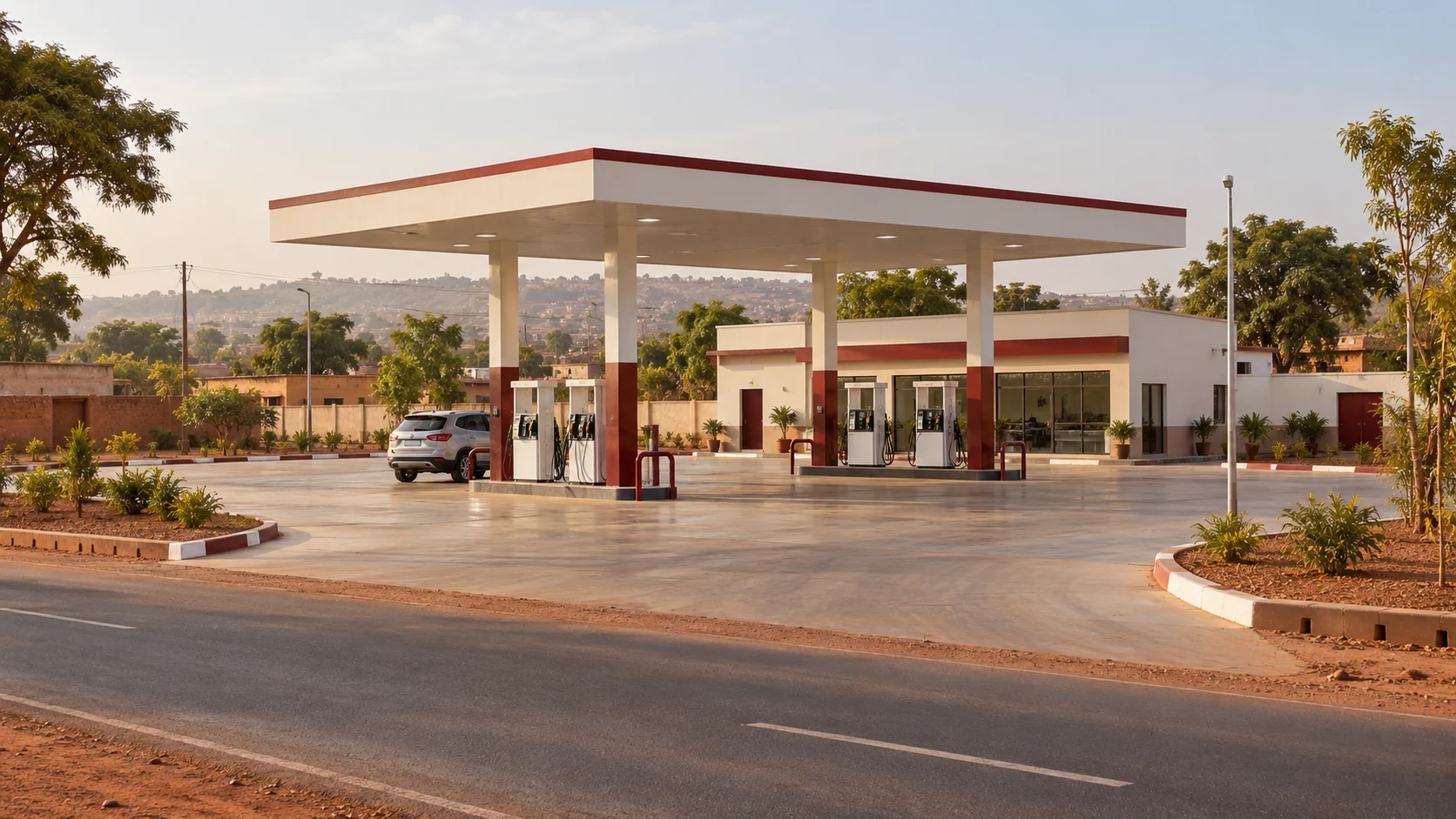
Planned fuel station
Koulikoro road
Ex Garbal
A planned fuel station on the Koulikoro road (Ex Garbal), bringing fuel supplies closer to users of this route.
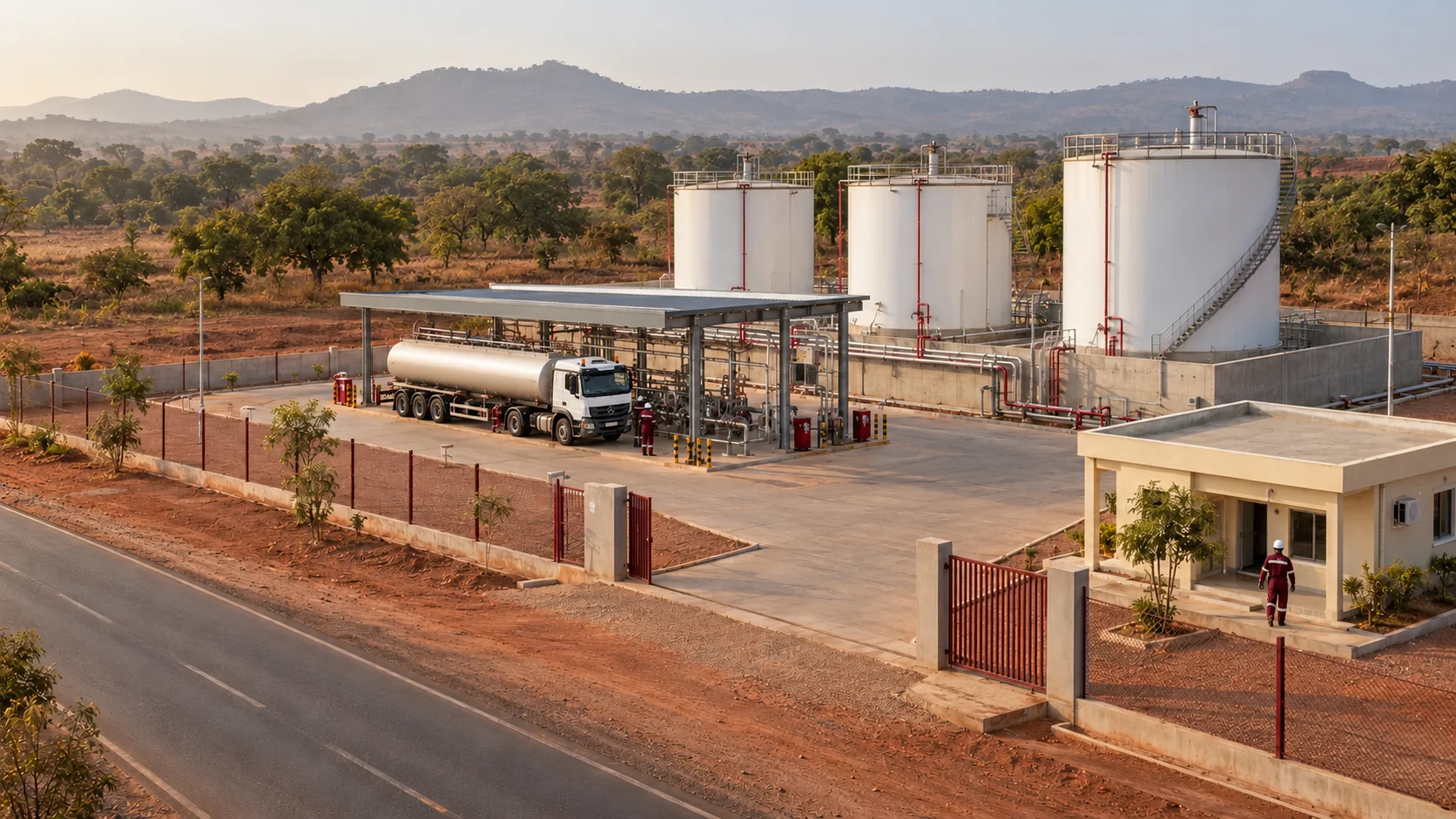
Illustrative rendering of the Banankoro depot
From the Banankoro depot to the future fuel stations on the Koulikoro road (Ex Garbal) and in Kéniéba, AFRIFUEL is developing its storage and distribution infrastructure in Mali.
Banankoro
Strategic location
~3,000 m²
Depot area
560,000 L
Initial depot capacity
3,000,000 L
Depot expansion
AFRIFUEL is preparing two fuel station projects: on the Koulikoro road (Ex Garbal) and in Kéniéba. These future sites will complement our fuel distribution network.
Planned fuel station
Ex Garbal
A planned fuel station on the Koulikoro road (Ex Garbal), bringing fuel supplies closer to users of this route.
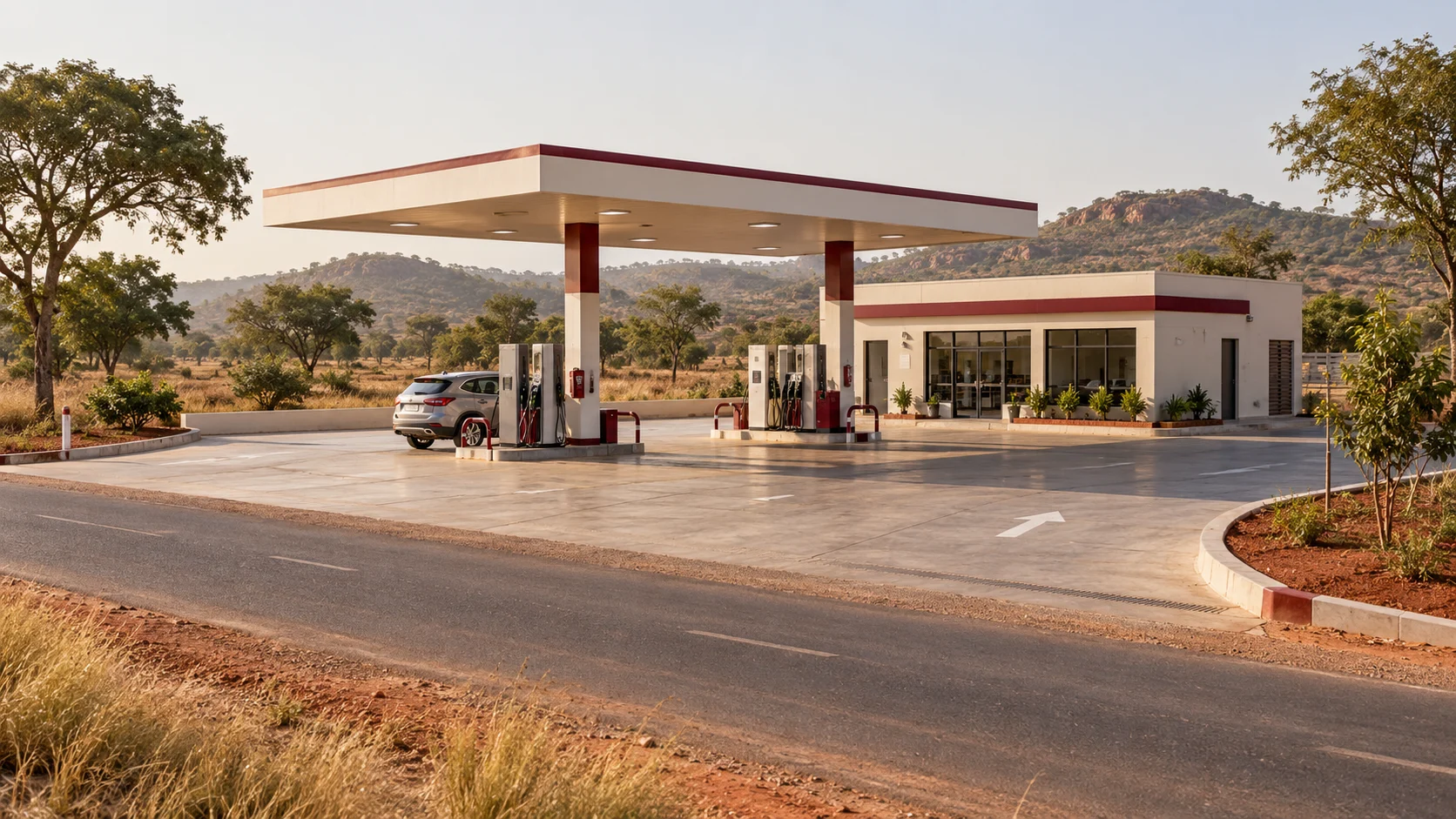
Planned fuel station
Western Mali
A future fuel station in Kéniéba to strengthen fuel distribution and support supply needs in western Mali.
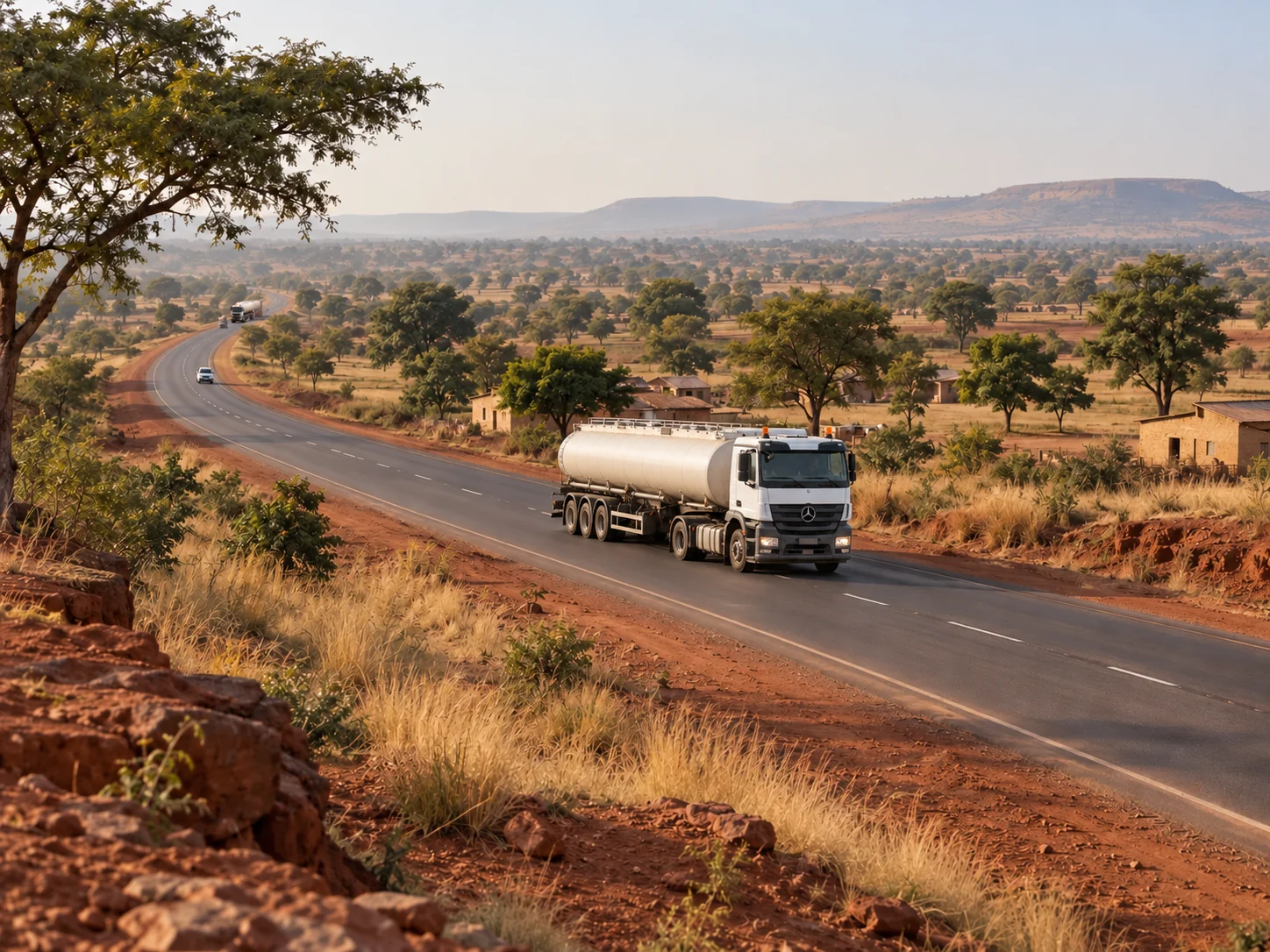
The choice of Banankoro follows a clear logistics strategy: positioned on the main route linking the capital to production areas and the borders with Côte d’Ivoire and Burkina Faso, the site will ease pressure on urban depots and speed up tanker turnaround.
The architectural and engineering project is structured in two progressive installation phases to support growing industrial volumes.
Planned initial storage capacity
• Vertical tanks for essential fuels (diesel and petrol).
• Rapid unloading arms for heavy tanker semi-trailers.
• Watertight containment basin and firefighting equipment.
• Guard post and metrological checks on incoming and outgoing volumes.
19% of the planned site’s maximum capacity
Long-term target maximum capacity
• Installation of additional tank groups in stages.
• A stronger role as a regional hub for mining and industrial companies.
• Buffer storage providing several weeks of strategic supply autonomy.
• Fully automated remote tank gauging and level reporting.
100% — Target depot expansion capacity
This project is more than a standalone facility: it is central to AFRIFUEL’s growth model for the years ahead.
Establishing a strategic reserve outside Bamako’s congested areas to ensure continuous supplies, even when import corridors are under pressure.
Enabling the 60+ tanker trucks to unload faster and begin new supply runs without unproductive waiting time at congested terminals.
Incorporating the strictest industrial safety standards from the design stage: sealed containment basins, oil separators and 24/7 remote monitoring systems.
Speak with AFRIFUEL’s management about our storage and fuel station projects and your long-term contractual requirements.